Made in France challenge
E-bike made in France
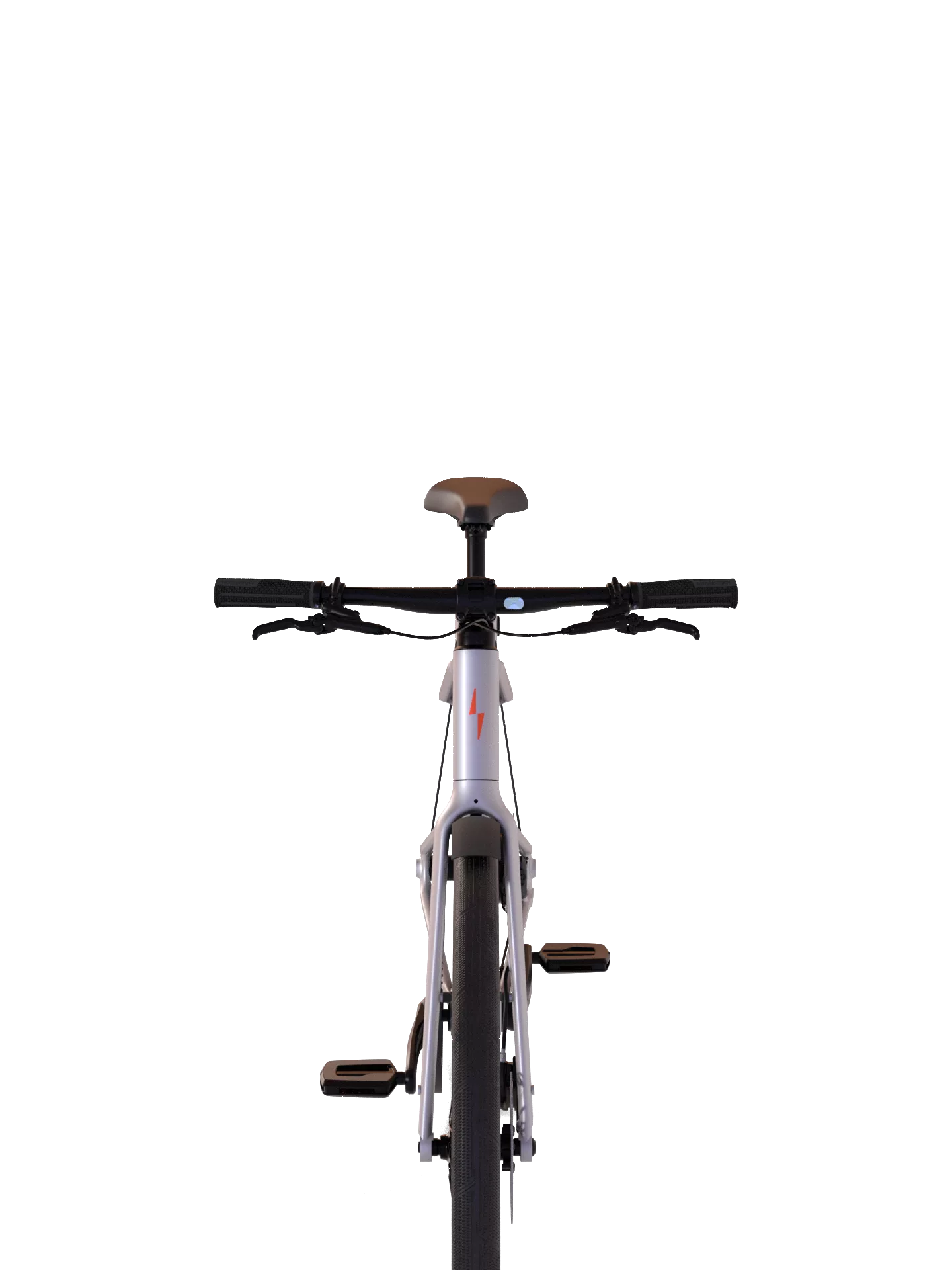
By taking on the challenge of building an e-bike in France, we contribute to the revival of the French cycling industry and support local job creation.
By prioritizing European components, we uphold the highest social and environmental standards while reducing our production carbon footprint.
E-bike made in France:
understanding this marking

In the European Union, the rules of non-preferential origin (NPO), defined in Articles 59 to 63 of the Union Customs Code (UCC) and the associated regulations, establish a product’s country of origin. For a more detailed understanding, we recommend consulting the French Customs Guide to non-preferential origin.
Determining NPO requires precise information on the manufacturing process, the countries involved in production (whether by supplying components or carrying out operations), the cost of individual components, and the ex-works price of the finished product.
When a product, such as an electric bicycle, is manufactured across multiple countries, the UCC provides that its country of origin is France if it undergoes its last substantial transformation, namely its assembly, in France. However, this alone is not sufficient. It is also necessary to comply with one of the following primary rules: the change of tariff heading (CTH) or the 45% value added rule.
The change of tariff heading
To qualify as “Made in France”, an assembled electric bike must have a tariff heading (the first four digits of the customs code) that differs from the tariff headings of its non-French components. As e-bikes fall under tariff heading 8711, this is usually the case.
However, in the case of electric bicycles, a specific requirement applies: non-originating parts must have a tariff heading other than 8501, 8507, or 8714. These headings cover essential components such as motors (8501), batteries (8507), frames, forks, rims, cranksets, brakes, saddles, and many other parts listed under 8714. If any of these elements are not made in France, the CTH rule becomes inapplicable, making this option virtually impossible.
The 45% value added rule
To comply with this rule, the value added through assembly and possibly the incorporation of parts manufactured in France must represent at least 45% of the ex-works price of the electric bike. This is the rule generally used for e-bikes to qualify for the “Made in France” marking.
Residual rules
If neither the CTH rule nor the 45% value added rule is satisfied, the residual rules apply. For e-bikes, this is the “major portion rule”: the e-bike’s country of origin is the country whose components account for the largest share of the total component value.
Accordingly, an e-bike is of French origin when French components represent the largest share of that value, exceeding the share attributable to components from countries such as Taiwan or China. However, this designation raises questions about the credibility of a “Made in France” label, particularly when a significant proportion of the product’s value comes from foreign components.
An e-bike typically qualifies for the “Made in France” marking if it is assembled in France and at least 45% of its ex-works price consists of the cost of assembly, other operations carried out in France, and components manufactured in France.

A requirement for 45% of value added to be generated in France might seem modest, but only a tiny fraction of today’s e-bikes qualify for the “Made in France” label.
Beware of “Frenchwashing!”
What about Eclair?

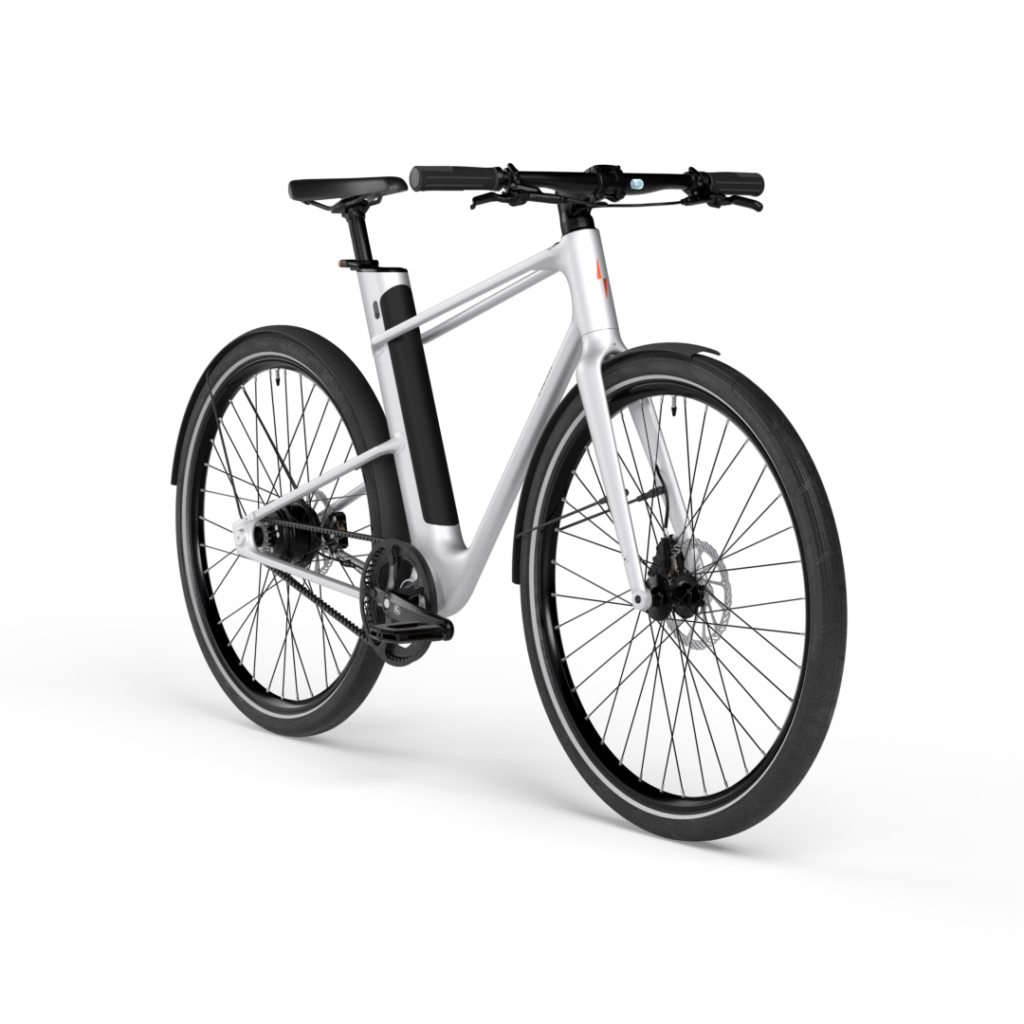
Eclair is, first and foremost, a frame made in France. In Auxelles-Bas, near Belfort, CITELE Group machines the aluminum castings produced in-house and assembles them with chromoly steel tubes drawn by Osborn Metals in Longueville, Seine-et-Marne. Technocoat in Chassieu, near Lyon, carries out the painting.
Our responsibly designed battery, developed by PYMCO in Ivry-sur-Seine near Paris, is manufactured in Cluses, Haute-Savoie.
eBikeLabs in Grenoble develops the eBikeOS software.
In the Loire department, Mach1 in Marclopt manufactures rims and spokes, while Stronglight in Saint-Étienne produces mudguards.
For enhanced theft protection, we use a GPS-enabled connectivity module manufactured by Velco near Nantes.
Ultimately, 60% of our electric bike’s value added is generated in France, with nearly 10% more coming from European manufacturers.
And of course, Eclair is assembled in France by l’Usine à Vélo in Villeurbanne.
-
French value added
60%
-
Assembled in
France
By choosing Eclair, you support a new generation of French startups and SMEs committed to the cycling industry while reducing your carbon footprint.
Made in France FAQ
Is it enough for an e-bike to be assembled in France to be considered “Made in France”?
No. While assembly in France constitutes the “last substantial transformation” and remains a necessary condition, it is not sufficient on its own. To officially claim the Made in France label, one of the following two rules must also be met: the Change of Tariff Heading rule or the 45% Value Added rule (where at least 45% of the value added is generated in France).
Is an electric bike made by a French brand automatically “Made in France”?
No. A brand’s nationality has no bearing on the product’s official country of origin. A French company may design and assemble its bikes in France but still be unable to label them Made in France if the rules of origin are not met. Conversely, a foreign company whose bikes comply with these regulations is entitled to use the Made in France marking. Therefore, the claim “French brand” holds no legal weight regarding the product’s origin.
Is origin marking mandatory for an e-bike?
No. Origin marking is not mandatory; it is at the brand’s discretion. However, if such a claim is made, it must be justifiable. The DGCCRF (French Directorate General for Competition, Consumer Affairs and Fraud Control) or French Customs monitor compliance and may penalize any false or misleading claims that could deceive the consumer.
What is the difference between “Made in France” and “Fabriqué en France”?
None. Both terms have the same meaning and indicate the product’s French origin, based on the same rules of non-preferential origin. Fabriqué en France is simply the French translation of Made in France, which is the internationally recognized designation.
What is the difference between “Made in France” and the “Origine France Garantie” label?
Made in France is an origin marking defined by the European Union’s rules of non-preferential origin. The standard criteria include assembly in France and a minimum of 45% value added being generated in the country. The use of this claim must be justifiable; French Customs or the DGCCRF monitor compliance and can penalize any false or misleading indications that could deceive the consumer.
The Origine France Garantie (OFG) label is a private certification. To obtain it, a product must pass a compliance audit conducted by an independent body. It is based on two specific criteria: at least 50% of the unit cost price (calculated on a specific set of components) must be acquired in France, and the product’s essential characteristics must originate in France.
For an e-bike, this means the frame and motor must be of French origin, and the full assembly must take place in France. (Note: A battery manufactured in France is not considered an essential characteristic). The OFG certification is valid for three years, with an annual audit to ensure ongoing compliance.
Consequently, there is no automatic alignment between Origine France Garantie and Made in France, even though the criteria for electric bikes are similar. While the Made in France marking is free to use, OFG comes at a cost.
Who monitors the use of the “Made in France” marking?
French Customs or the DGCCRF (French Directorate General for Competition, Consumer Affairs, and Fraud Control) monitor compliance. They verify that the marking meets official regulations and penalize any misleading claims that could deceive the consumer.

Join our community
Subscribe to our newsletter and stay updated on all things Eclair. Discover our latest news, enjoy exclusive offers, receive invitations, and more!